Mastering Stress: Principles and Practical Strategies for College Success
A self-paced e-learning course built in Articulate Rise 360
Project Overview
College students face stress from multiple directions — academics, finances, relationships, and major life transitions — often without a clear framework for understanding or managing it. Mastering Stress moves learners from foundational concepts to personal application, ending with a customized stress management plan they can use immediately.
Audience: College students navigating the pressures of academic life. Designed for self-paced individual learning with no facilitator required.
Tools and Skills
- Articulate Rise 360 — course development, interactive lessons, drag-and-drop sorting, flashcards, accordion interactions, step-by-step carousels, knowledge checks
- Instructional design — content sequencing, learner-centered design, scaffolded learning progression
My Process
Sequencing from theory to practice
The course is deliberately structured to build understanding before asking learners to apply it. Early sections establish what stress is and how the body responds physiologically, so that by the time learners reach the stress management techniques, they have the context to evaluate them meaningfully — not just follow a list of tips.
Grounding content in college life
Each interaction uses college-specific scenarios and examples rather than generic ones. The sorting activity asks learners to classify real college situations as eustress or distress; the stressor categories reflect the academic, social, financial, and family pressures students actually face. This keeps the content relevant and immediately recognizable.
Ending with personal application
Rather than closing with a summary, the final section guides learners step by step through building their own stress management plan — reflecting on stressors, selecting healthy strategies, setting realistic goals, and identifying support resources. The goal is for learners to leave with something they’ve built themselves, not just information they’ve consumed.
Course Structure
| Section | Title | Interaction Type |
|---|---|---|
| 1 | Understanding Stress: Definitions and Types | Drag-and-drop sorting (Eustress vs. Distress) |
| 2 | The Science of Stress: General Adaptation Syndrome | Flashcard review (Alarm, Resistance, Exhaustion stages) |
| 3 | Personal Stressors and Mediators of the Stress Response | Accordion expand/collapse + knowledge check |
| 4 | Evaluating Stress Management Techniques | Step-by-step carousel |
| 5 | Creating Your Personal Stress Management Plan | Guided accordion plan builder |
Screenshots
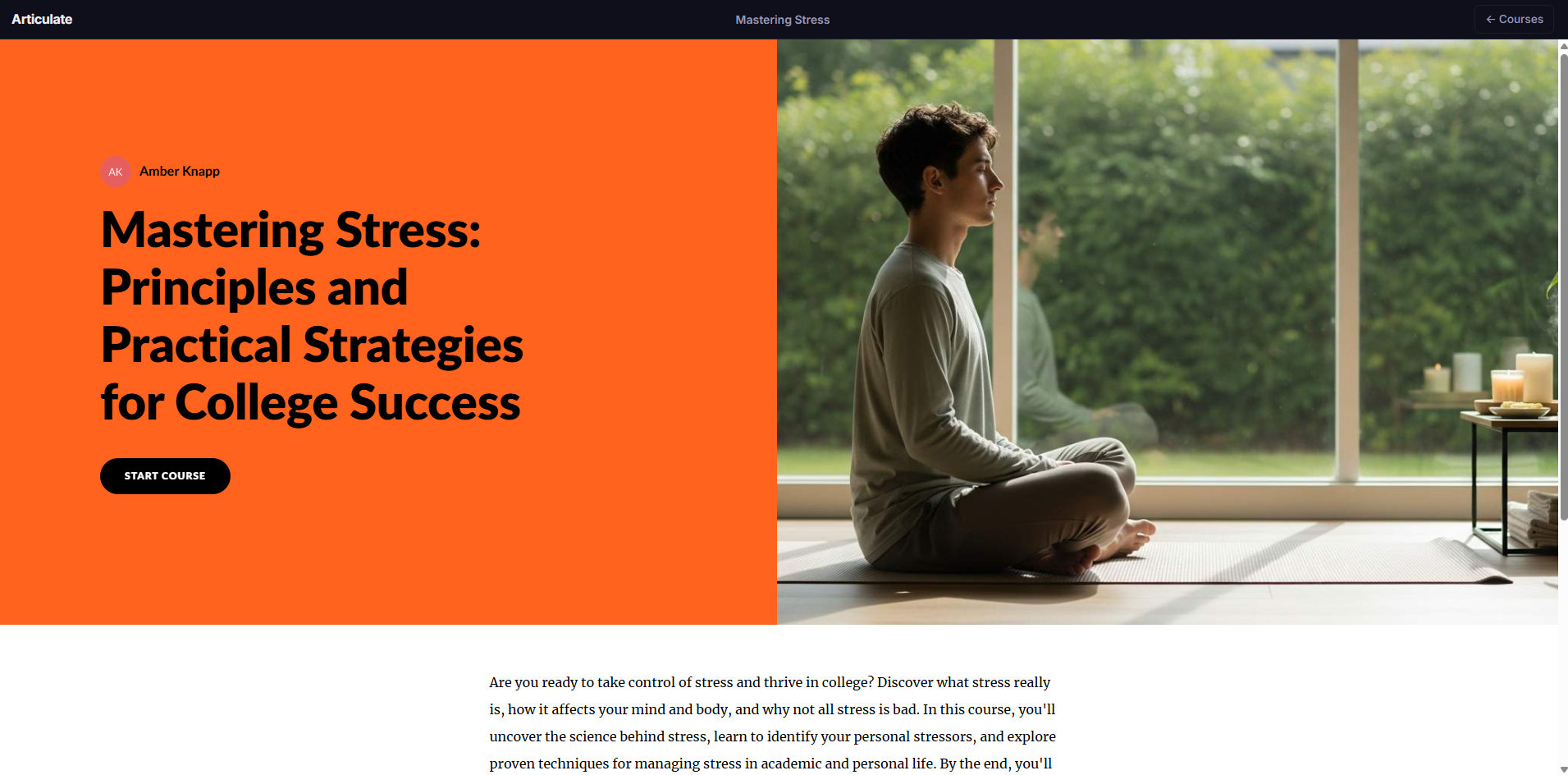 Course cover — bold visual design with orange branding
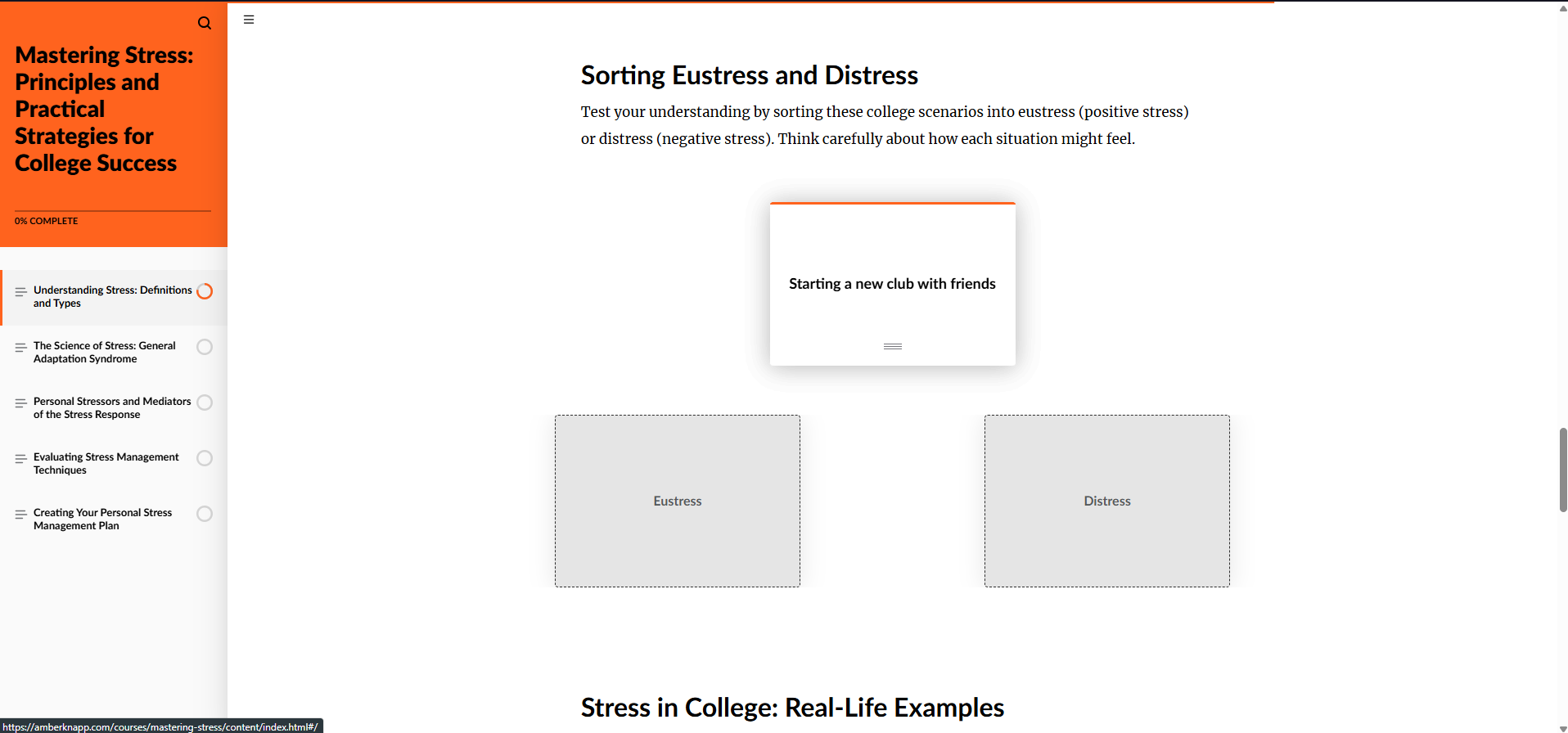 Section 1 — Drag-and-drop sorting: learners classify college scenarios as eustress or distress
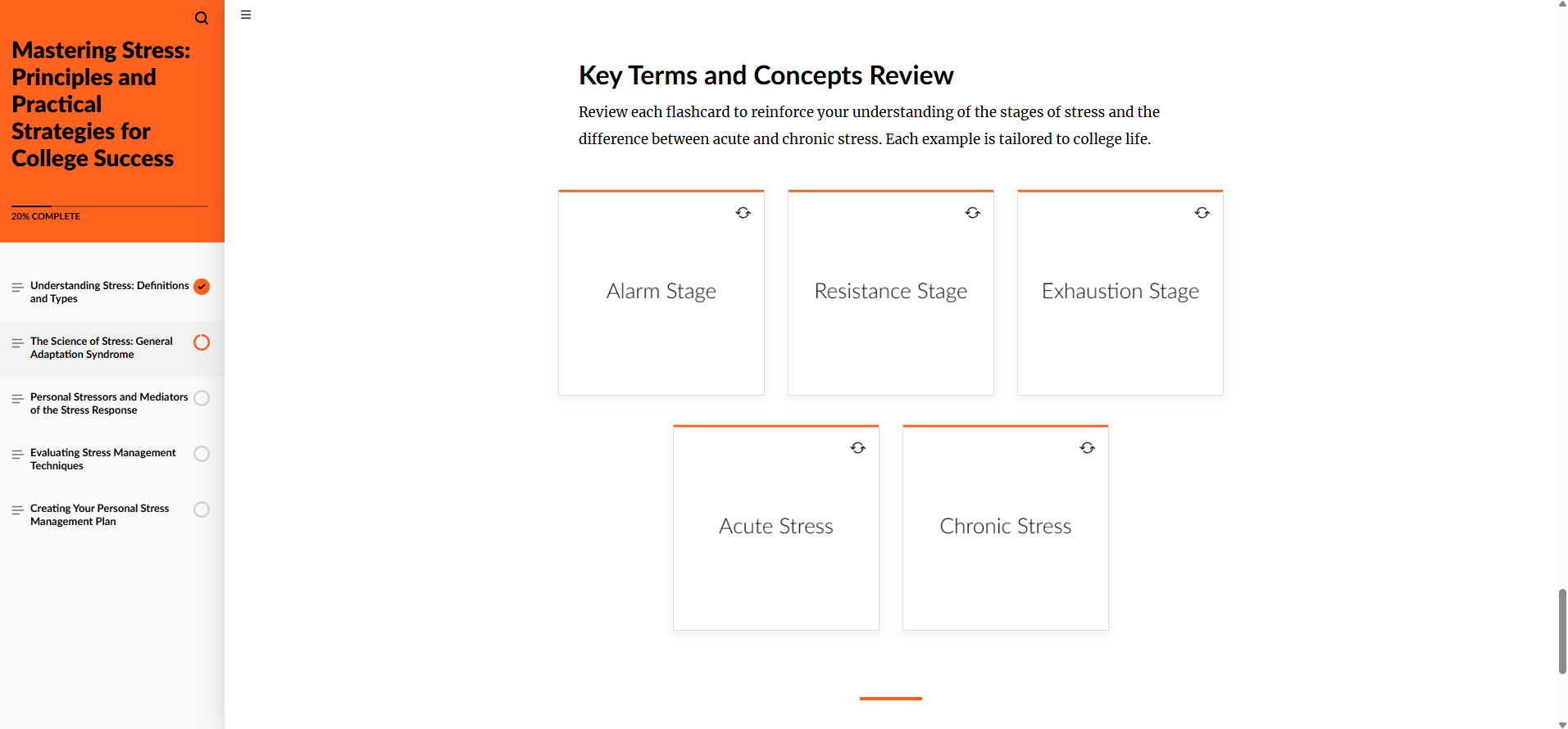 Section 2 — Flashcards covering the stages of the General Adaptation Syndrome
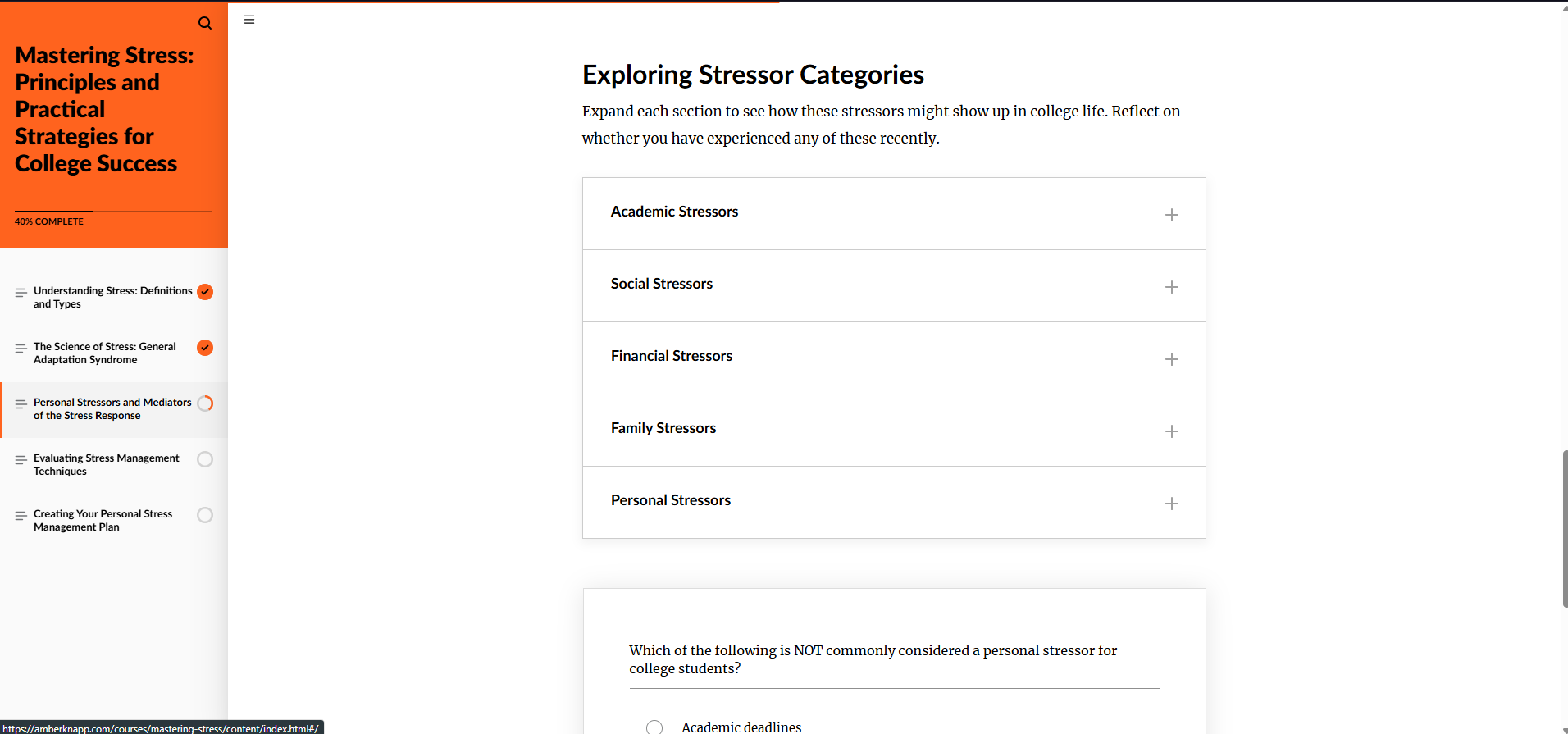 Section 3 — Accordion interaction exploring academic, social, financial, family, and personal stressors
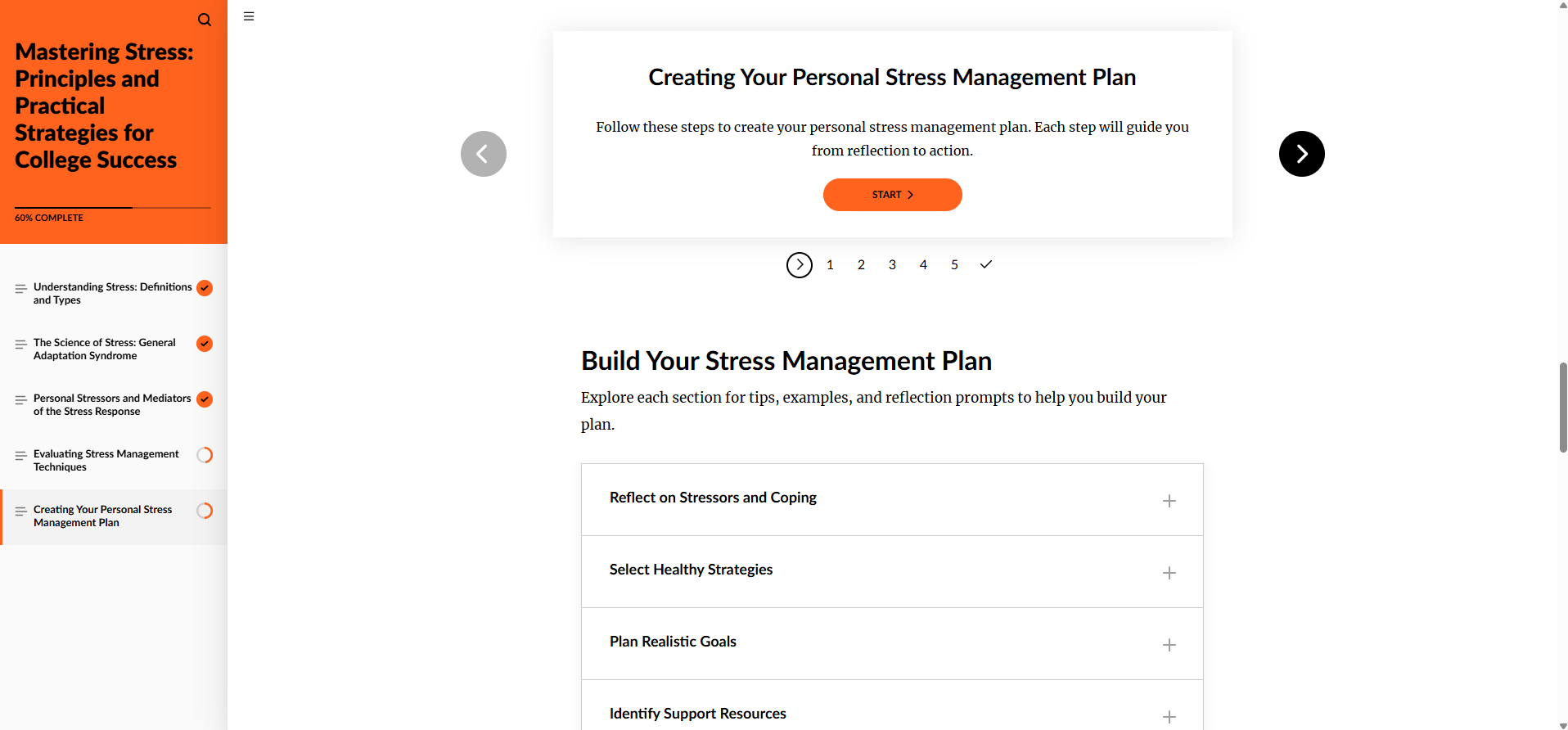 Section 5 — Step-by-step plan builder guiding learners from reflection to action
What I’d Add With More Time
More images and visual variety throughout — Rise 360 courses can feel text-heavy without intentional visual design, and stronger imagery would make the content more engaging and easier to process.
Supporting Documents
ABCD-style objective planning for each learning goal
Delivery format, objectives, and assessment plan
Built as a portfolio piece demonstrating instructional design and Articulate Rise 360 development skills.