Therapeutic Modalities in Athletic Training
A comprehensive e-learning course built in Articulate Rise 360
Project Overview
Therapeutic modalities are a core competency for athletic trainers, but mastering the underlying science — biophysics, tissue response, clinical decision-making, contraindications — requires more than memorization. This course gives Master of Athletic Training students a rigorous, self-paced resource to build and consolidate their foundational knowledge as they prepare for certification.
Audience: Graduate students in Master of Athletic Training programs preparing for board certification. Designed for self-paced individual learning to complement coursework and clinical training.
Scope: 15 modules covering the full range of therapeutic modalities used in athletic training practice.
Tools and Skills
- Articulate Rise 360 — full course development across 15 modules, interactive lessons, assessments, and evidence-based content organization
- Instructional design — graduate-level content architecture, clinical reasoning scaffolding, alignment to athletic training competencies
My Process
Organizing a large body of clinical knowledge
Fifteen modules covering distinct modality categories — cryotherapy, thermotherapy, electrotherapy, ultrasound, traction, and more — required careful sequencing. The course moves from foundational concepts (what modalities are and how they work physiologically) through individual modality categories, then closes with integration modules on functional application and tissue healing. Learners build a mental framework early that each subsequent module reinforces and extends.
Balancing depth with accessibility
Graduate students need enough depth to perform well on certification exams and in clinical settings, but content that reads like a textbook loses them. Each module focuses on the clinical “so what” — not just what a modality does, but when to use it, when not to, and how to document it.
Closing with integration
The final module — Therapeutic Modalities for Tissue Healing: Evidence and Best Practices — intentionally brings together concepts from across the course, reinforcing that no single modality exists in isolation and that evidence-based decision-making requires weighing multiple factors at once.
Course Structure
| Module | Title |
|---|---|
| 1 | Therapeutic Modalities in Athletic Training: Foundations and Roles |
| 2 | Cryotherapy: Principles, Application, and Safety |
| 3 | Thermotherapy: Biophysical Effects and Clinical Decision-Making |
| 4 | Hydrotherapy: Properties, Effects, and Clinical Practice |
| 5 | Therapeutic Ultrasound: Principles, Techniques, and Evidence |
| 6 | Electrotherapy: Foundations, Currents, and Clinical Applications |
| 7 | TENS and Pain Modulation: Mechanisms and Clinical Practice |
| 8 | Spinal Traction: Biomechanics, Application, and Documentation |
| 9 | Modality-Assisted Range of Motion: Strategies and Considerations |
| 10 | Intermittent Pneumatic Compression: Principles, Indications, and Practice |
| 11 | Electromagnetic Modalities: Laser Therapy and Diathermy |
| 12 | Alternative Modalities: Theories, Applications, and Evidence |
| 13 | Electrophysiological Testing: Principles and Clinical Interpretation |
| 14 | Neuromuscular and Functional Electrical Stimulation: Concepts and Clinical Use |
| 15 | Therapeutic Modalities for Tissue Healing: Evidence and Best Practices |
Screenshots
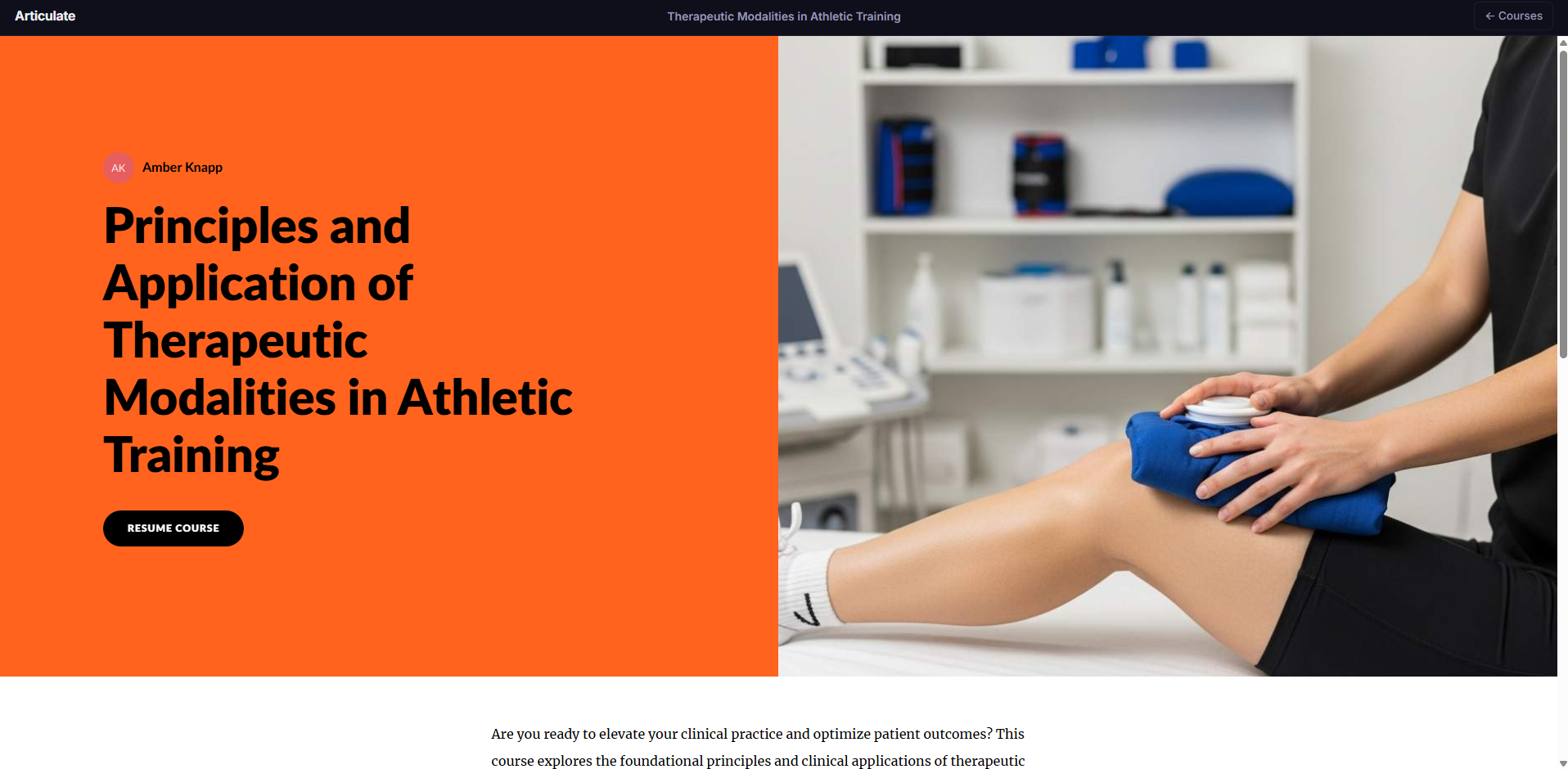 Course cover — clinical imagery reflecting the hands-on nature of athletic training
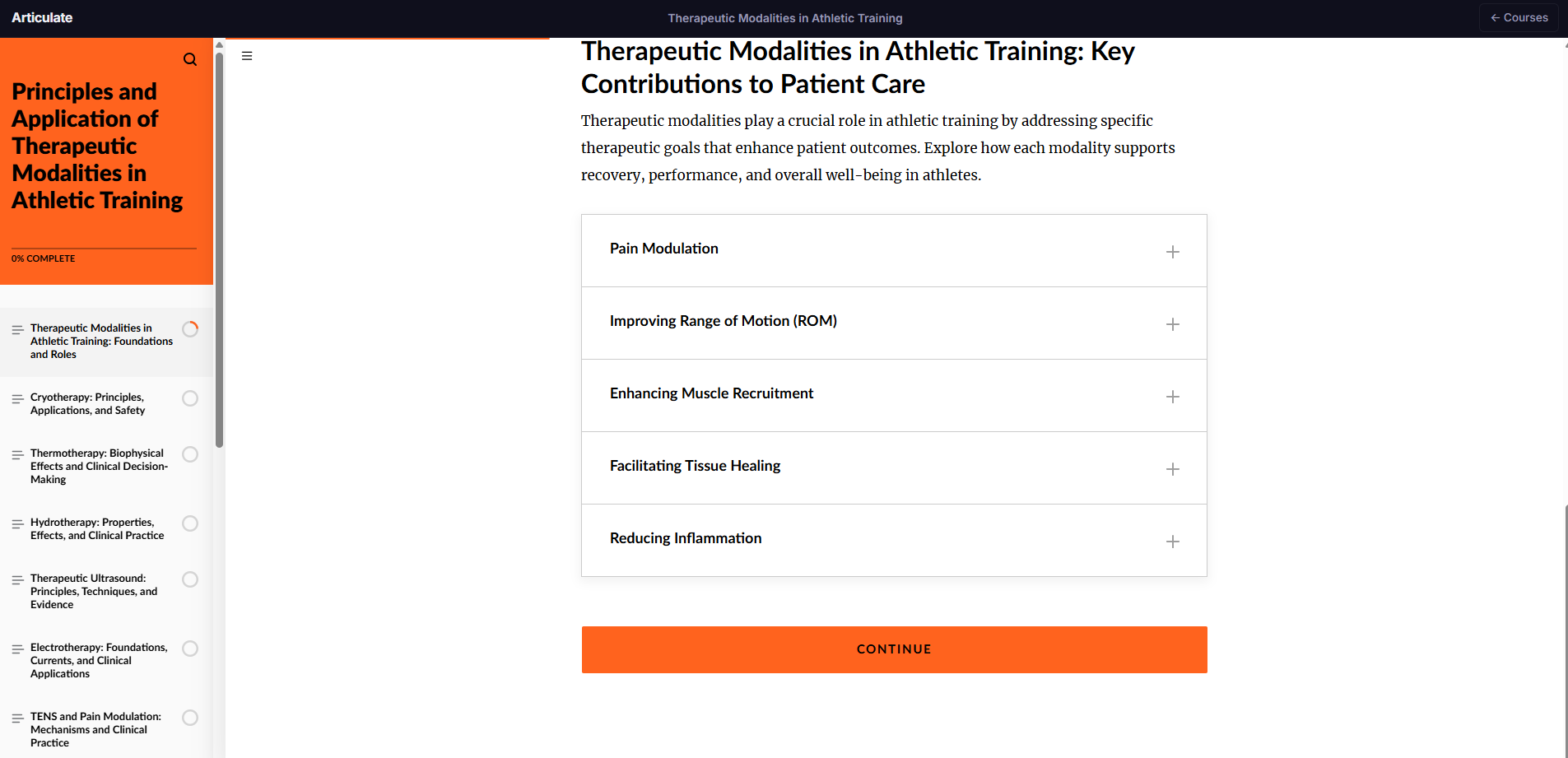 Module 1 — Accordion covering the five clinical roles of therapeutic modalities
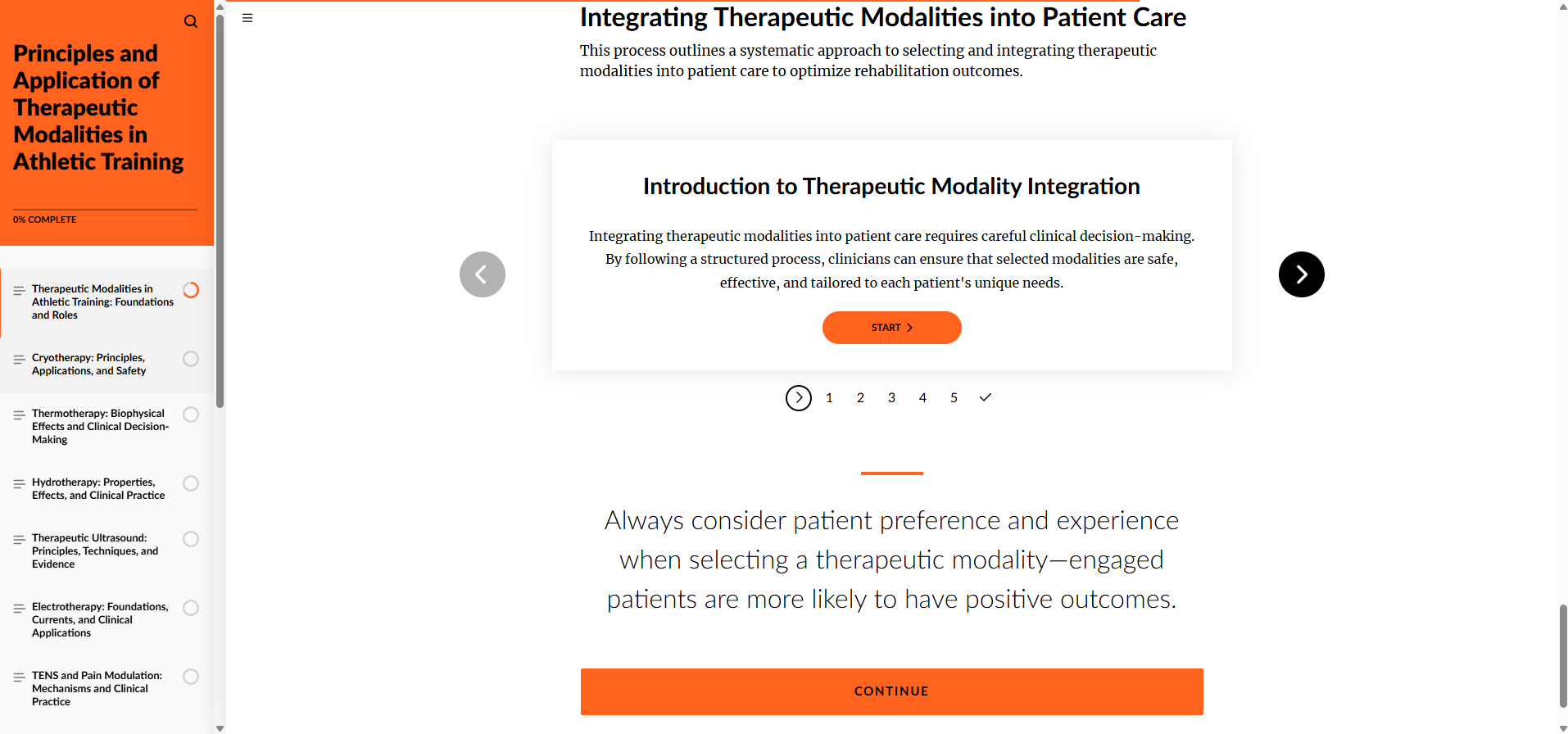 Module 1 — Step carousel guiding systematic integration of modalities into patient care
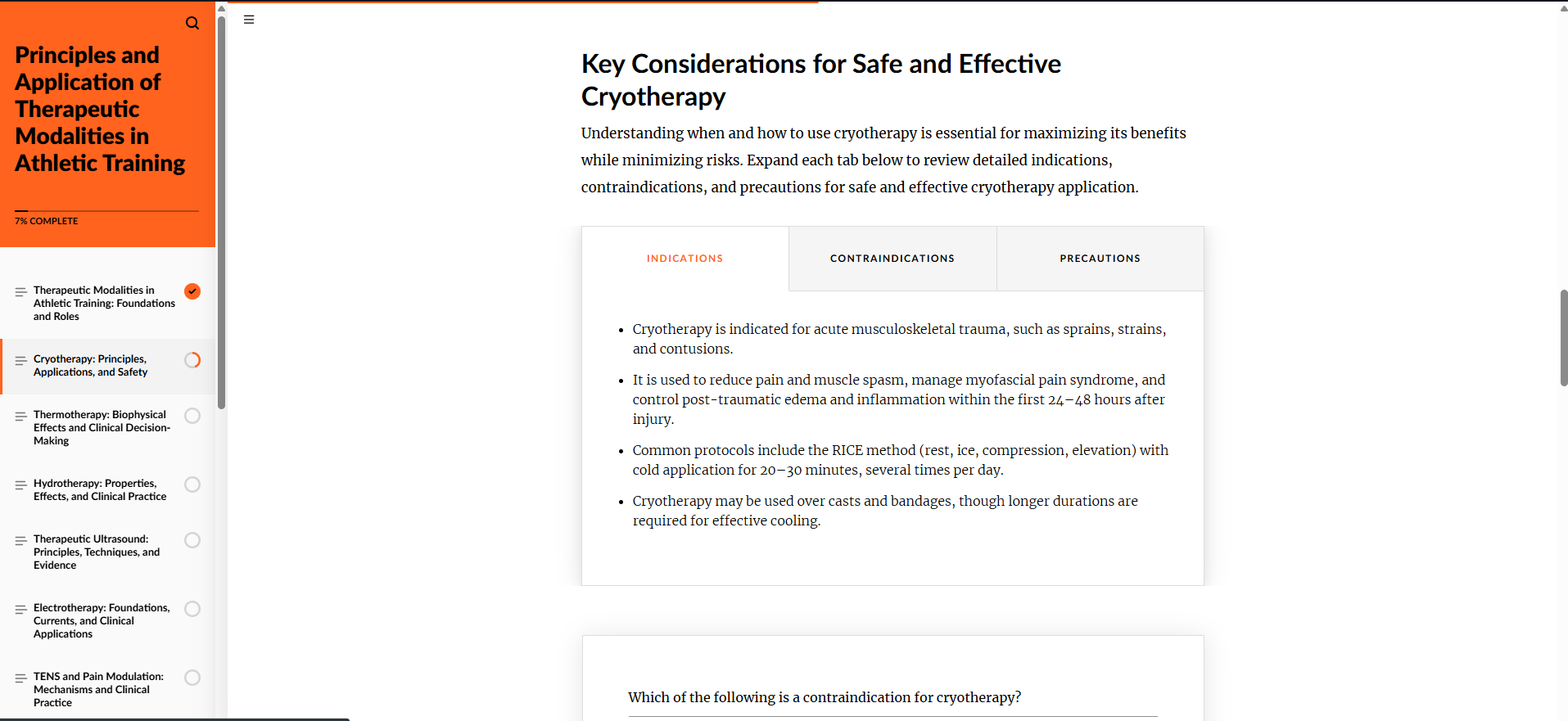 Module 2 — Tabbed interaction covering safe and effective cryotherapy application
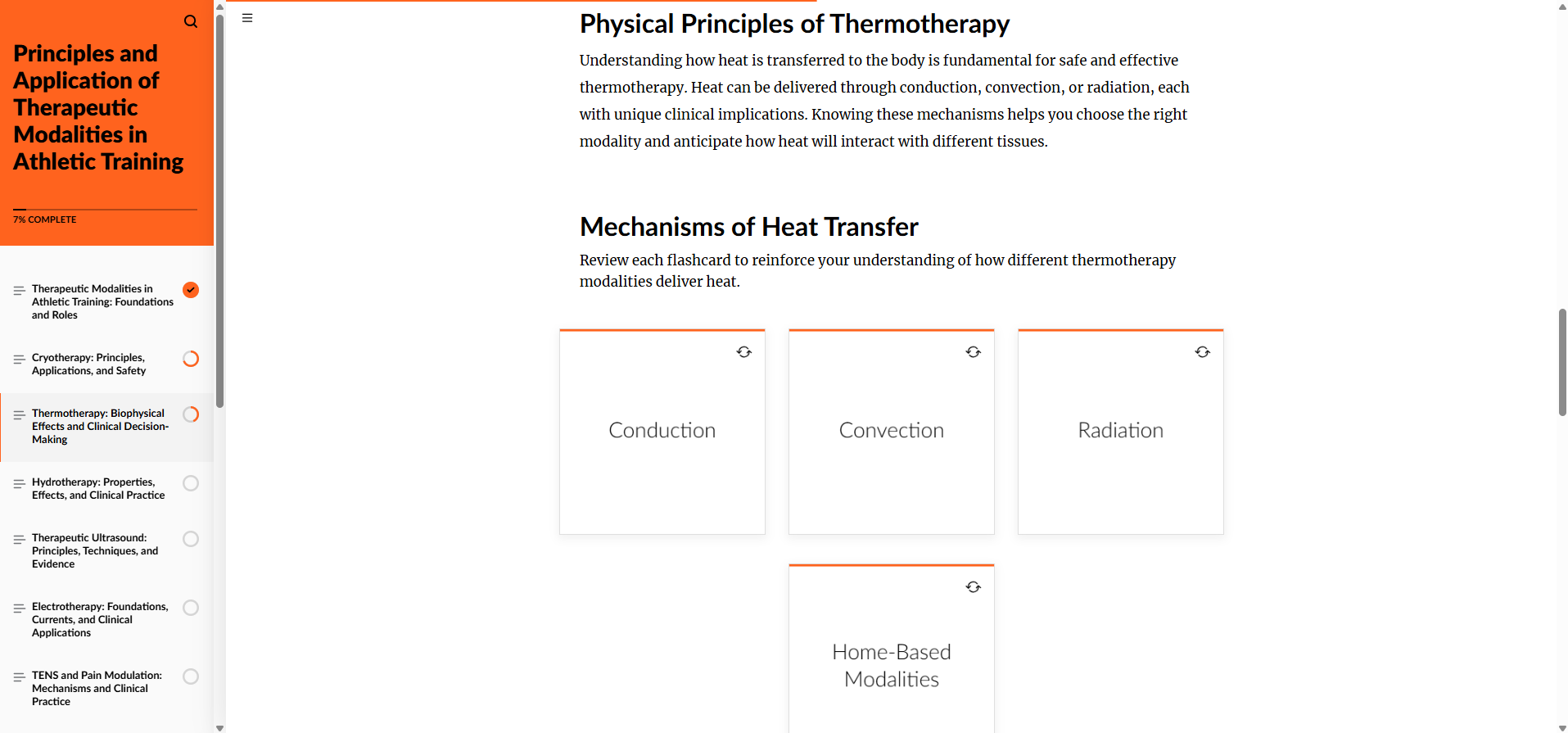 Module 3 — Flashcards on conduction, convection, radiation, and home-based thermotherapy
Supporting Documents
- Content Map (coming soon)
- Storyboard (coming soon)
Built as a portfolio piece demonstrating instructional design and Articulate Rise 360 development skills.